
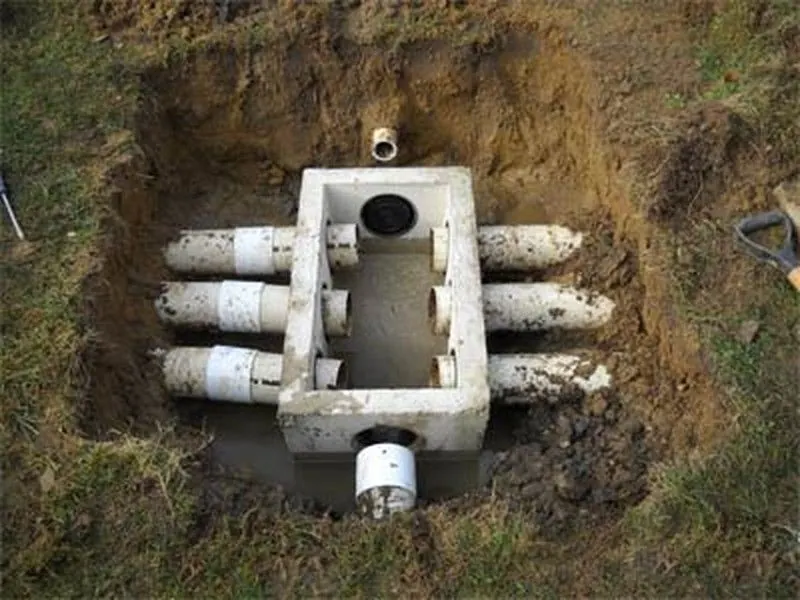
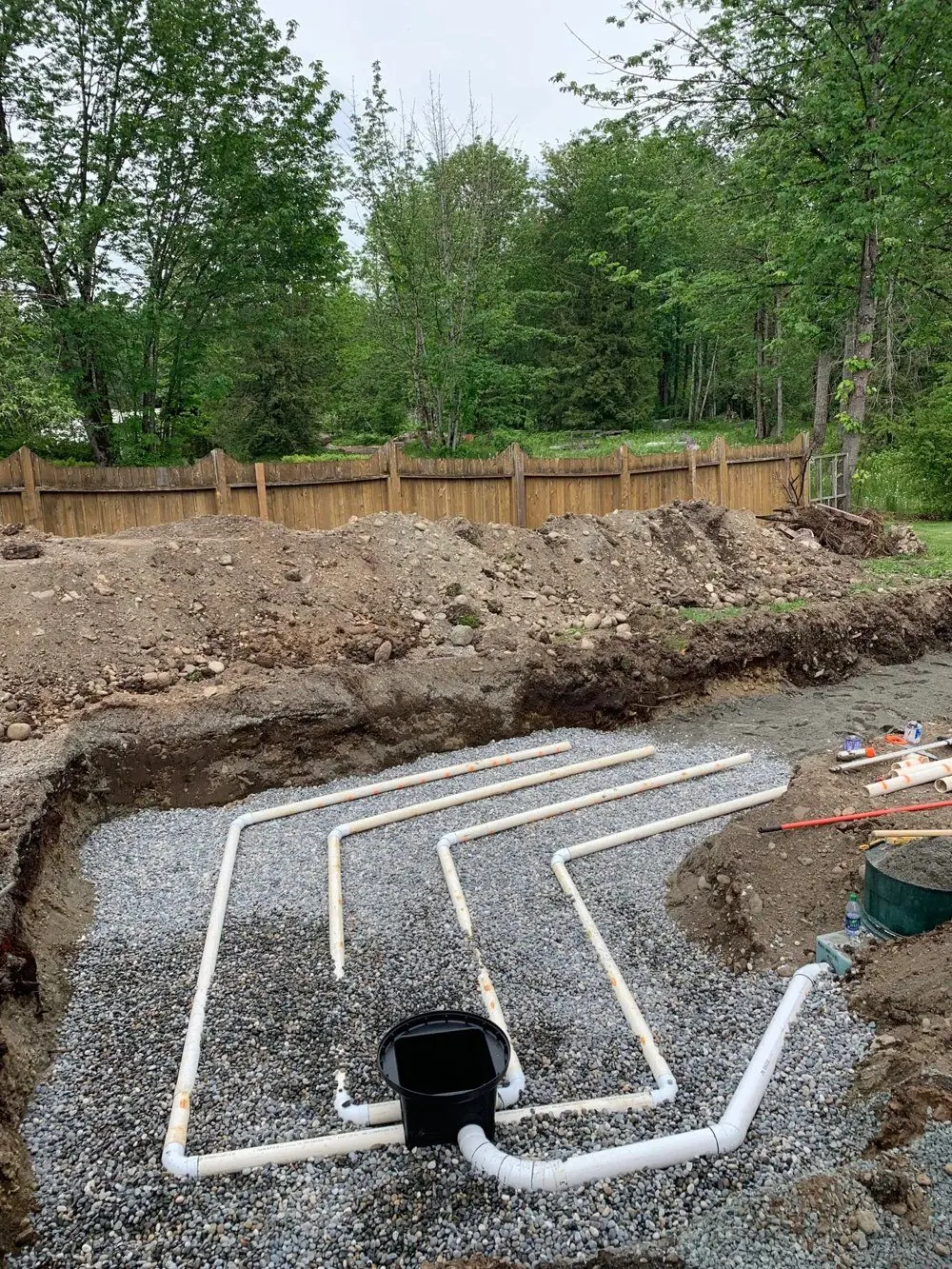
The drain field is the last stage of your system. Effluent leaves the tank, passes through the D-box and soaks into the soil through the field lines. When the soil stops absorbing, the whole system backs up.
What you may see outside
- Grass over the field that is greener, thicker or wetter than the rest of the yard
- Soft, spongy or standing water over the field
- A sewage smell in the yard
- Effluent surfacing at the field or downhill from it
What you may notice inside
- Slow drains throughout the house
- Gurgling in pipes
- Backups in the lowest fixtures, often after laundry
It is not always the field
A full tank, a blocked pipe, a failed D-box or a broken pump can all produce the same signs. Checking the tank, the D-box and the pump first is cheaper than assuming the field has failed.
Why fields fail
Overloading with too much water, solids escaping from a neglected tank, compaction from vehicles, roots, and age are the usual causes. Regular pumping and spreading water use through the week all help.
What to do
Cut down water use, keep people and pets off wet areas and have the system traced from the house to the field. Findings can tell you whether repair is possible or whether the field needs replacing.
Related services
Questions about this guide
Will pumping repair a failing drain field?
A pump-out does not restore damaged pipes or solve every drainage problem. Wet ground and odour need assessment of the tank, distribution, field and site conditions before selecting a repair.