
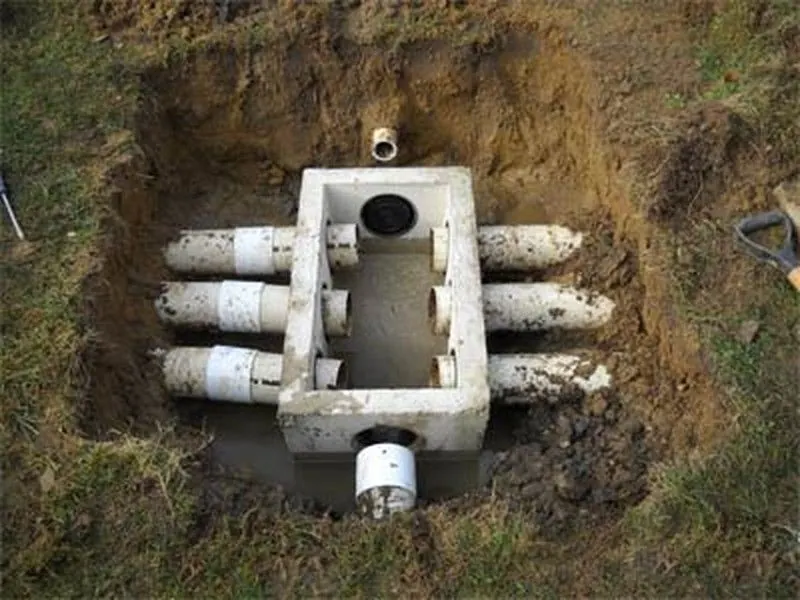
A D-box is a small part with a large effect. Replacing or re-levelling it early can protect a field that would cost many times more to replace.
Signs you may need this
- One section of the field is wet or lush while the rest is normal
- Gurgling drains and repeated backups even after pumping
- Standing water or a strong smell near the field
- The D-box was last seen years ago, or has never been located
- Roots are growing toward the field or the box
What to discuss in the service scope
- Locate and uncover the D-box with minimal digging
- Check for cracks, tilt, solids buildup and uneven outlets
- Re-level and clear the box, or replace it with a new concrete or plastic box
- Check each outlet line for flow and for signs of blockage
- Add an access riser so the box can be checked without digging again
Safety first. A buried D-box is shallow but still part of a sewage system. Do not dig it up yourself, and keep children and pets off the area while it is open.
What affects the quote?
- Box depth, condition and the number and size of connected pipes
- Excavation access and whether nearby lines need repair
- Replacement material, levelling and agreed surface reinstatement
Ask for the scope and any additional work to be explained before booking. We do not quote a fixed price from a symptom alone.
Before you book
- Any drawing showing the tank and distribution box
- Photos of surface symptoms taken from a safe location
- Let us know about landscaping or buried utilities near the work area
What to know in BC
A damaged D-box lid is a minor repair. Replacing the box or changing how the field is laid out can be a bigger job that needs an Authorized Person and a filing with the health authority. We confirm which applies before we start.
Common questions
How long does a D-box last?
A concrete box can last a long time if it stays level and is not overloaded. Settling soil, frost, roots and heavy vehicles driven over the field are the usual causes of damage.
Can I replace the D-box and skip the field?
If the field is only damaged on the overloaded lines, a new D-box with some line repair can restore flow. If the whole field is saturated, the box is only part of the answer, and we will say so.
Why is the D-box hard to find?
Older systems often have no riser and no records. We use records where they exist and probe the field to find it.
What affects the cost of this service?
The quote depends on box depth, condition and the number and size of connected pipes, as well as access and the agreed work. Ask what is included before booking; a symptom alone is not enough to set a reliable price.