
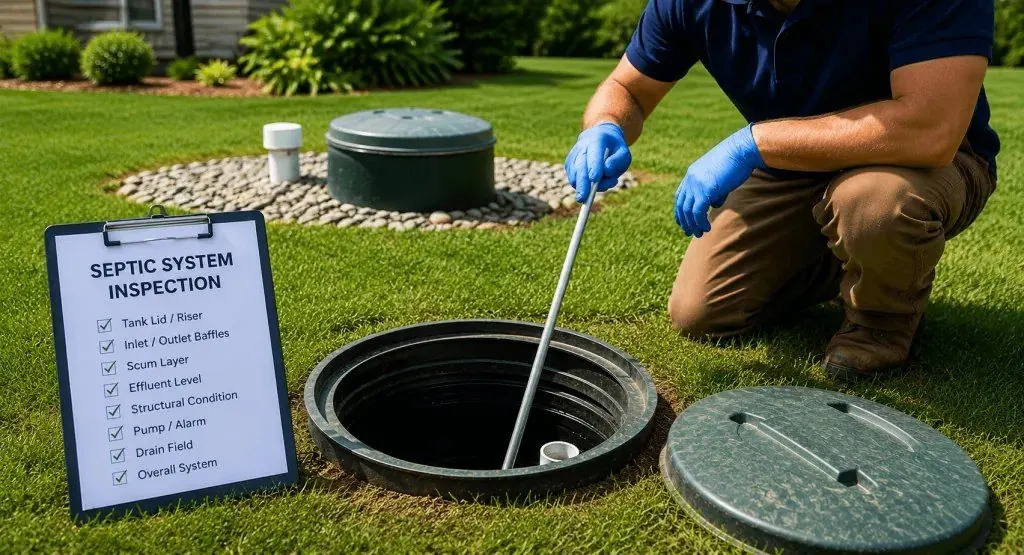
A septic inspection tells you where the tank and field are, what condition they are in, and whether the paperwork matches what is in the ground. For sellers, a clear report ahead of listing removes a common reason deals fall apart.
Signs you may need this
- You are making an offer on a home with a septic system
- You are about to list and want to know what a buyer's inspector will find
- The seller cannot tell you where the tank is or when it was last pumped
- A lender or buyer has asked for a septic report
- The property has had additions or extra bedrooms since the system was built
What to discuss in the service scope
- Locate the tank, D-box and field, and compare them with any filing on record
- Open the tank and check lids, baffles, walls and liquid levels
- Walk the field and check for wet areas, surfacing effluent and root damage
- Check the pump, float and alarm if the system has them
- Deliver a written report with photos and plain-language findings
- Include our buyer's guide to owning a home on septic with every inspection
What affects the quote?
- Tank location, number of access points and whether lids need uncovering
- Available records and the scope of pump, field and camera checks
- Report requirements and your subject-removal or listing deadline
Ask for the scope and any additional work to be explained before booking. We do not quote a fixed price from a symptom alone.
Before you book
- The property address and inspection deadline
- Any filing, maintenance plan or past pump-out records
- Seller permission and arrangements for safe access
What to know in BC
Your realtor can request a search for any filing on record with the health authority. The filing and any maintenance plan and pump-out records should pass to the new owner. Setbacks to wells, water and property lines, and the capacity of the system for the size of the home, are part of what an inspection should look at.
Common questions
When should the inspection be booked?
As soon as you have an accepted offer, so the report fits inside your condition period. Ask us about timing before you write the condition into the contract.
Who pays for it?
Usually the buyer, but sellers sometimes order one before listing. It is negotiable.
What if the system fails?
You will know before you commit. Repair or replacement cost can be used in price negotiation, or you can walk away if the contract allows.
Can you inspect if the tank lids are buried?
Yes. We find and uncover them, which may add time. Installing risers afterward makes every future inspection easier.
What affects the cost of this service?
The quote depends on tank location, number of access points and whether lids need uncovering, as well as access and the agreed work. Ask what is included before booking; a symptom alone is not enough to set a reliable price.